
by Anne MacLennan
Our Food System is in crisis. Food poverty is increasing, diet-related diseases are pushing the NHS to its limits, the environment is suffering, and there is little preparation for sudden ‘Food Shocks’.
Industrialised agriculture has provided high volumes of cheap, fast food, but with little regard for the health of workers, animals or consumers. The intensity of highly unnatural livestock farming has brought us diseases such as avian flu, now spreading beyond poultry as in described in this article on some of the horrors behind ‘convenient’ food.
In November, a group of top scientists gave a series of National Emergency Briefings, including one on Food Security (13 minute video below), warning that food system collapse would be a national security risk for which the UK is ‘woefully unprepared’.
National Emergency Briefing, December 2025: Professor Paul Behrens’ address to MPs, peers and other influential figures on the threats to the UK food supply, and the opportunities.
The climate that gave us reliable harvests has gone and the UK is dangerously dependent on food imports. In addition, the current food system is a major driver of greenhouse gas emissions (about a quarter of UK’s emissions), habitat destruction, water and air pollution, freshwater depletion, antibiotic resistance and pandemic risk.
In January, the UK Government released a sombre security assessment on global biodiversity loss, ecosystem collapse and national security apparently delayed by the Government because of its hard-hitting content. Global ecosystem degradation and collapse threaten UK national security and prosperity, particularly those ecosystems supporting global food production areas and impacting climate, water, and weather systems.
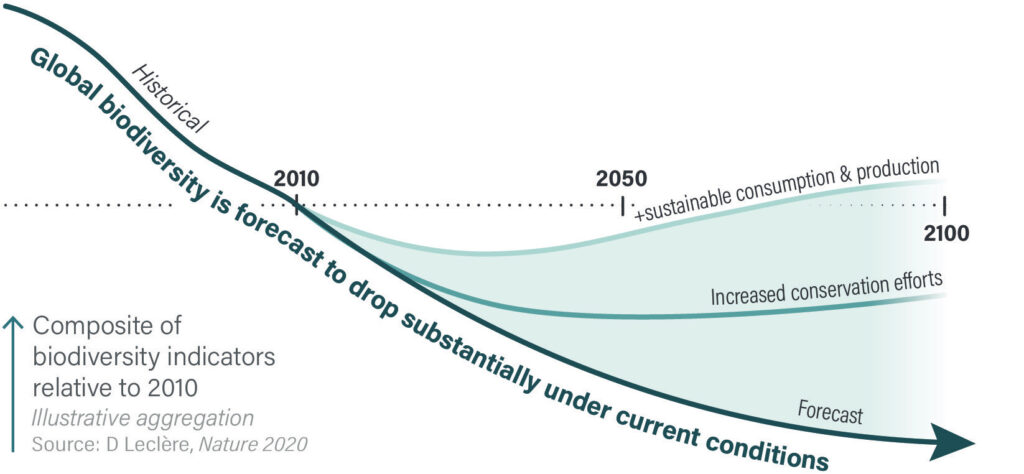 “Food production is the most significant cause of terrestrial biodiversity loss. As the global population grows, reaching 9.7 billion by 2050, the impact of food production on natural systems will intensify and it will become even more challenging to produce sufficient food sustainably.” UK Government Report: Global biodiversity loss ecosystem collapse and national security.
A week later, the British Medical Journal followed up with Ecosystem destruction will force the UK to tackle food security to alert the medical profession to the risks. On the same day, the UK Food and Drink industry launched the Food Resilience Commissionat Parliament. (Food resilience is variously defined, but generally refers to the capacity of the food system, from production to consumption, to cope with disruptions, adapt and recover, so that it bounces back to providing food in crisis situations.)
Food system transformation must happen, but the upside is that it will be beneficial to produce and eat healthy, plant-rich diets and cut waste; a win-win for people, farmers and nature.
A year ago, Tim Lang and colleagues called for ‘Civil Food Resilience’ in their Just in Case report: the capacity of everyday people to understand risks to food and be more prepared to work with others to ensure that everyone is well fed during, and after, crises. He emphasises that it’s not just the supply chain that has to bounce back after shocks, but civil society, and that requires a supported process of learning, capacity building and preparation. Hear Tim talk about consumption, food inequalities, climate impacts and much else – all in 14 minutes in this video:
So, it’s time to talk about the great food system transformation in Skye and Raasay.
See you at the Feel Heal Real Food day, on 25th April at Broadford Village Hall.