
New government data revealed the extent of the wild salmon crisis, highlighting that in Scotland 71% of the salmon stocks in Scotland are in poor conservation status. 88% of salmon rivers in England and 100% in Wales are now “at risk”.
Sea Lice
According to Wildfish it has been more than 570 days “since national regulations to help protect wild salmon, from Scottish salmon farms, were put on hold. The Sea Lice Regulatory Framework developed by scottishepa was intended to control sea lice emanating from open-cage farms that create a major hazard for migrating wild fish. However, following mass legal appeals by the salmon farming industry, those licence conditions have been stalled since 1st March 2025. With disastrous impacts.”
A new WildFish commissioned report exposes the cumulative impact of Scottish salmon farms on wild fish. The study models the dispersal of sea lice from all 16 operational salmon farms within the South Skye–Torridon study area, using official reported farm biomass data for 2024 and 2025.
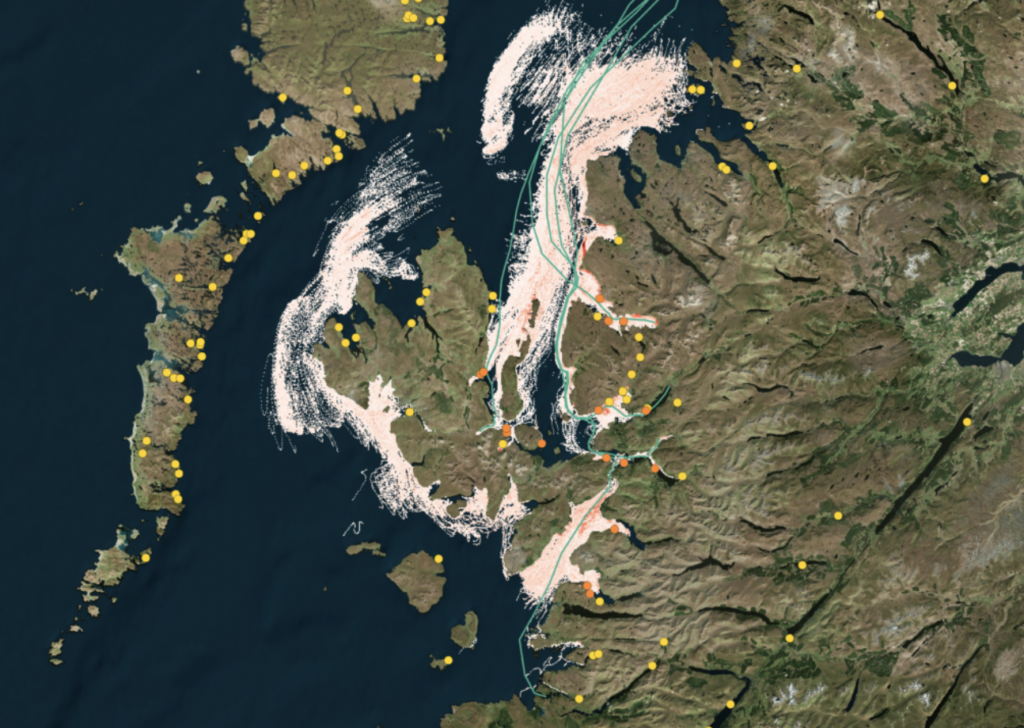
Plumes of sea lice dispersal around Skye on day 23 of the model.
In September, an independent review commissioned by the North Atlantic Salmon Conservation Organization concluded that aquaculture, and particularly sea lice, remains one of the principal human pressures affecting wild Atlantic salmon populations. The review concludes that “the true impact of salmon lice on wild salmon populations may be greater than current estimates.”
Off The Table: over 120 of the world’s leading chefs added their names to an open letter urging others to join them in taking open-net farmed salmon off menus.